


- Editor

- CategoryEquine Assisted Learning (EAL)
- DateFebruary 26, 2026
- Share
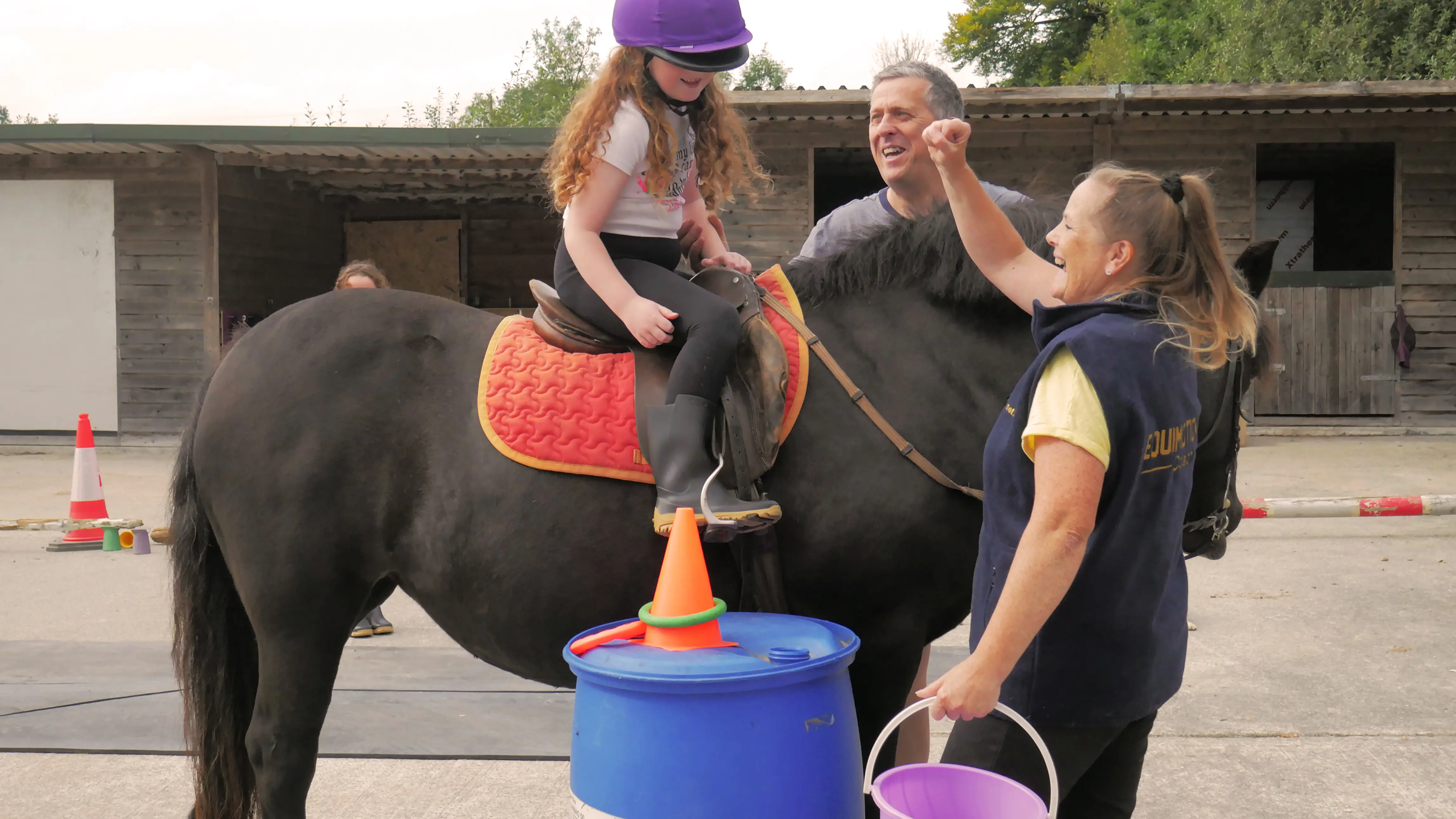
Equine Assisted Learning uses the natural connection between children and horses to build confidence, emotional regulation, and social skills. Discover how EAL sessions in Cloonlara, Co. Clare are helping children with autism, ADHD, and sensory processing differences thrive through gentle, ground-based activities with horses.
What Is Equine Assisted Learning?
Equine Assisted Learning, or EAL, is a structured approach to personal development that uses interactions with horses to help people build life skills, emotional awareness, and confidence. Unlike traditional riding lessons, EAL doesn't require anyone to get on a horse. Everything happens on the ground, which makes it accessible for children of all ages and abilities, including those with additional needs such as autism spectrum disorder (ASD), attention deficit hyperactivity disorder (ADHD), and sensory processing difficulties.
At SJ Equine Coaching in Cloonlara, Co. Clare, our EAL sessions are led by Majella Moloney, a qualified Equimotional Wellbeing Coach and experienced special needs assistant. Sessions are designed around each child's individual needs, and they can take place one-to-one or in small groups depending on what works best for the child and their family.
How Does EAL Actually Work?
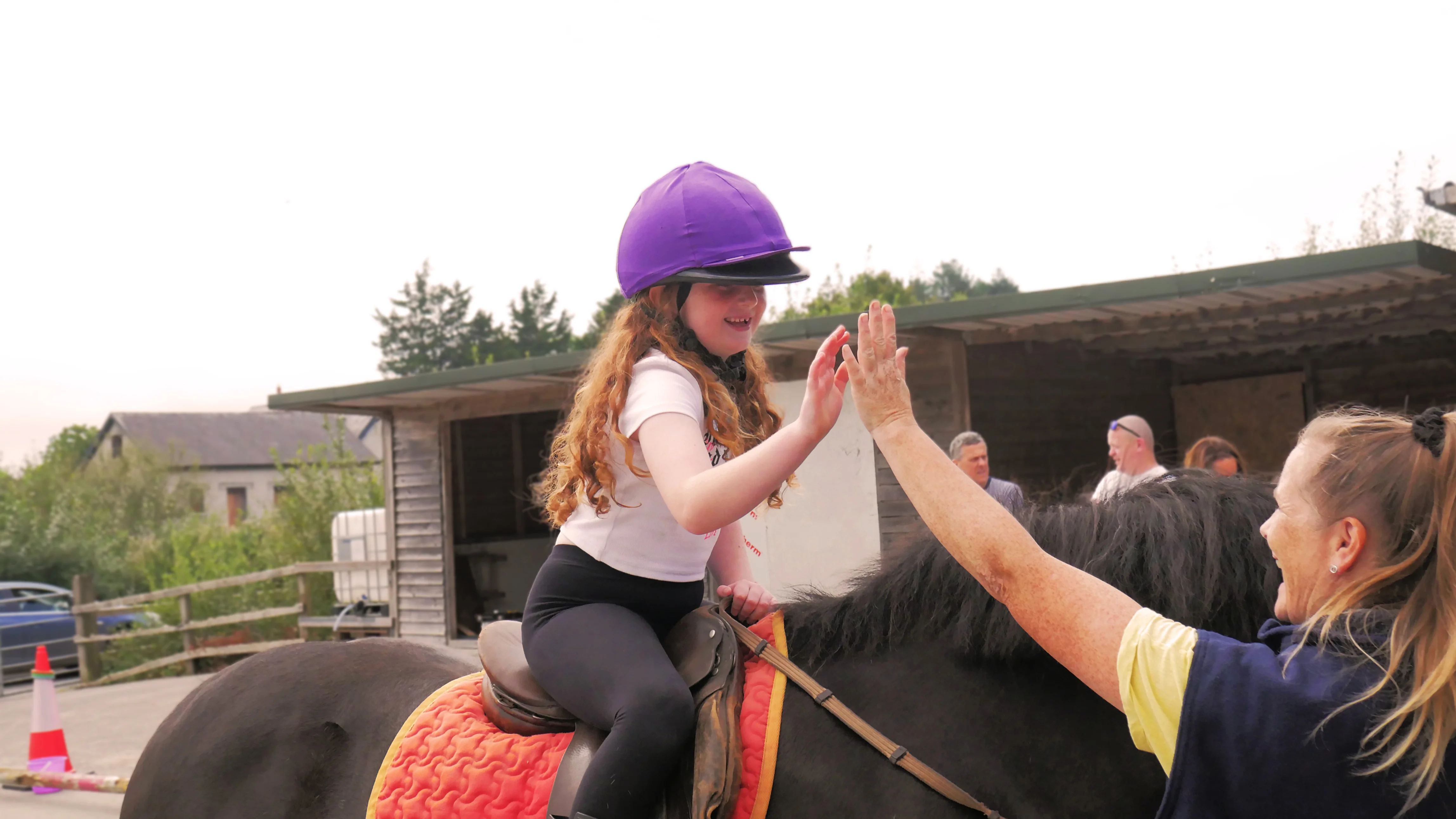
Horses are remarkably sensitive animals. They pick up on body language, emotional energy, and even changes in breathing and heart rate. This makes them incredibly effective partners in learning, because they respond honestly and immediately to whatever the child is feeling and doing. There's no judgement, no agenda, and no pressure to get things right.
A typical EAL session at our yard might include any combination of the following activities, tailored to the child on the day:
Grooming and horse care. Brushing a horse, picking out hooves, and general care routines help children develop fine motor skills, patience, and responsibility. The repetitive, rhythmic nature of grooming has a naturally calming effect on the nervous system, which is particularly beneficial for children who struggle with sensory overload or emotional regulation. Children learn to read the horse's body language during grooming too, if they brush too hard or move too fast, the horse will let them know, providing real-time, non-verbal feedback.
Leading exercises. Guiding a horse around the yard or through a course requires focus, clear intention, and calm assertiveness. For children who lack confidence or struggle with decision-making, leading a horse provides a tangible experience of being in charge. The horse follows because the child is communicating clearly through their body language and energy, not because anyone told it to. That sense of achievement is immediate and deeply felt.
Obstacle courses and problem-solving. Majella sets up simple courses around the yard that children navigate with their horse. These might involve weaving between poles, crossing different ground textures, or stopping at certain points. These activities develop planning, sequencing, spatial awareness, and teamwork. For children with ADHD, they provide a structured but engaging task that holds attention naturally because the horse is involved.
Feeding and stable management. Measuring feed, filling water buckets, and helping to muck out might not sound glamorous, but for children with additional needs, these tasks build routine, sequencing skills, and a sense of being needed. Many children who struggle in school settings come alive when given responsibility for an animal. It gives them a role that doesn't depend on academic ability or social performance.
Sensory exploration. Spending time around horses engages every sense. The warmth of a horse's body, the texture of their coat, the sound of their breathing, the smell of the yard — all of this provides rich sensory input in a natural, unforced way. For children with sensory processing differences, this kind of multi-sensory experience can be regulating and grounding, especially when it happens outdoors in a calm, open environment rather than a clinical setting.
Why EAL Works for Children with Additional Needs
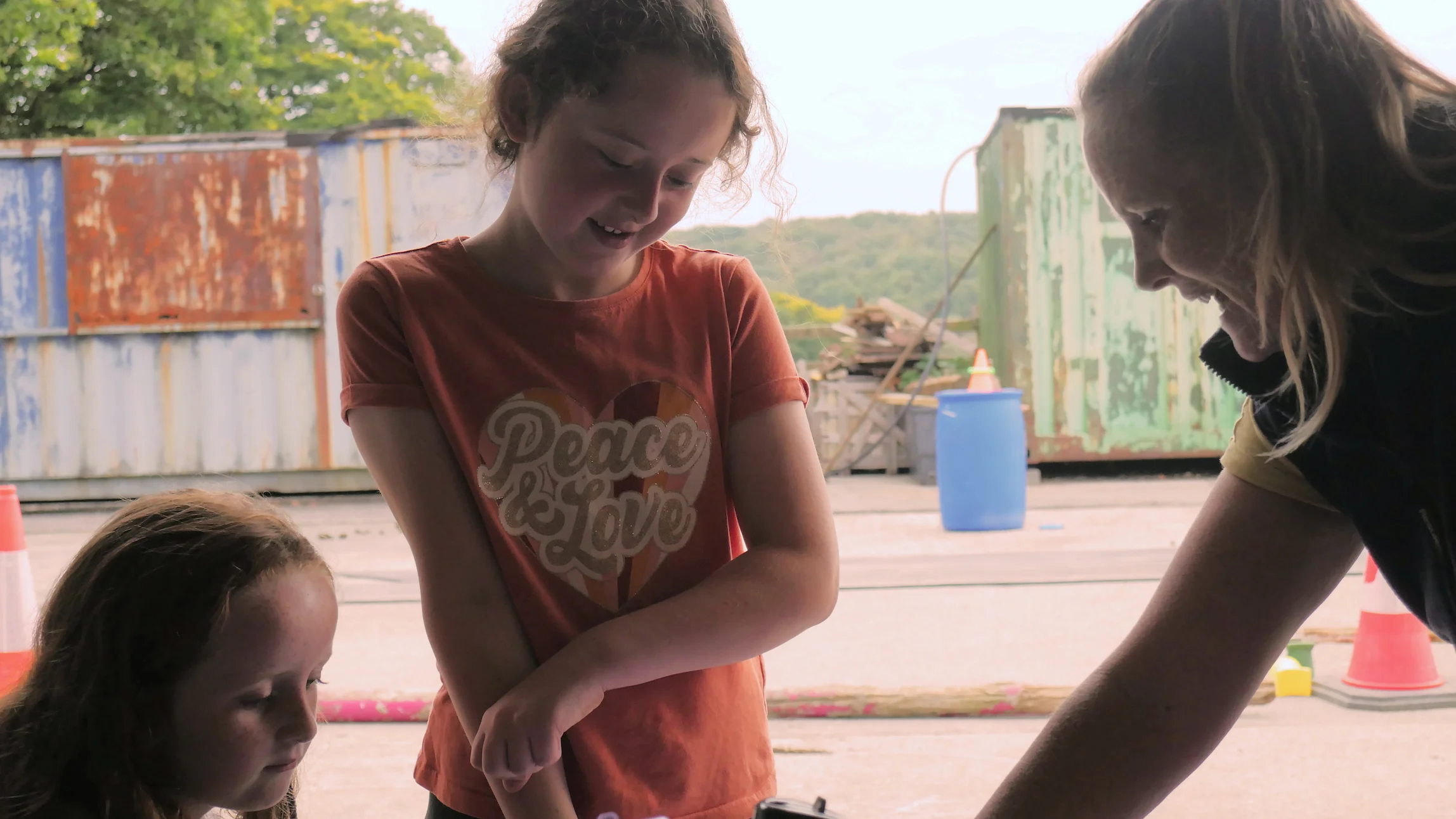
Children with ASD, ADHD, and sensory processing difficulties often find traditional therapeutic or educational settings challenging. The expectations to sit still, maintain eye contact, respond verbally, and follow a structured programme can be the very things that trigger anxiety, shutdown, or behavioural responses. EAL removes most of those demands.
In the yard, there's no requirement to make eye contact with anyone. There's no expectation of verbal communication. The child doesn't have to sit at a desk or follow instructions in a specific order. Instead, they're outdoors, moving freely, engaging with a living being who doesn't care whether they can read, write, or hold a conversation. The horse cares about one thing: how the child is showing up in that moment. And that simplicity is what makes it so powerful.
Research into equine-assisted interventions consistently shows benefits including improved emotional regulation, increased social engagement, reduced anxiety, better communication skills, and enhanced self-esteem. For children who have found other approaches difficult or who haven't responded to conventional therapies, EAL offers something fundamentally different — a way to learn and grow through relationship, movement, and sensory experience rather than through instruction and assessment.
What Parents in Clare and Limerick Are Finding
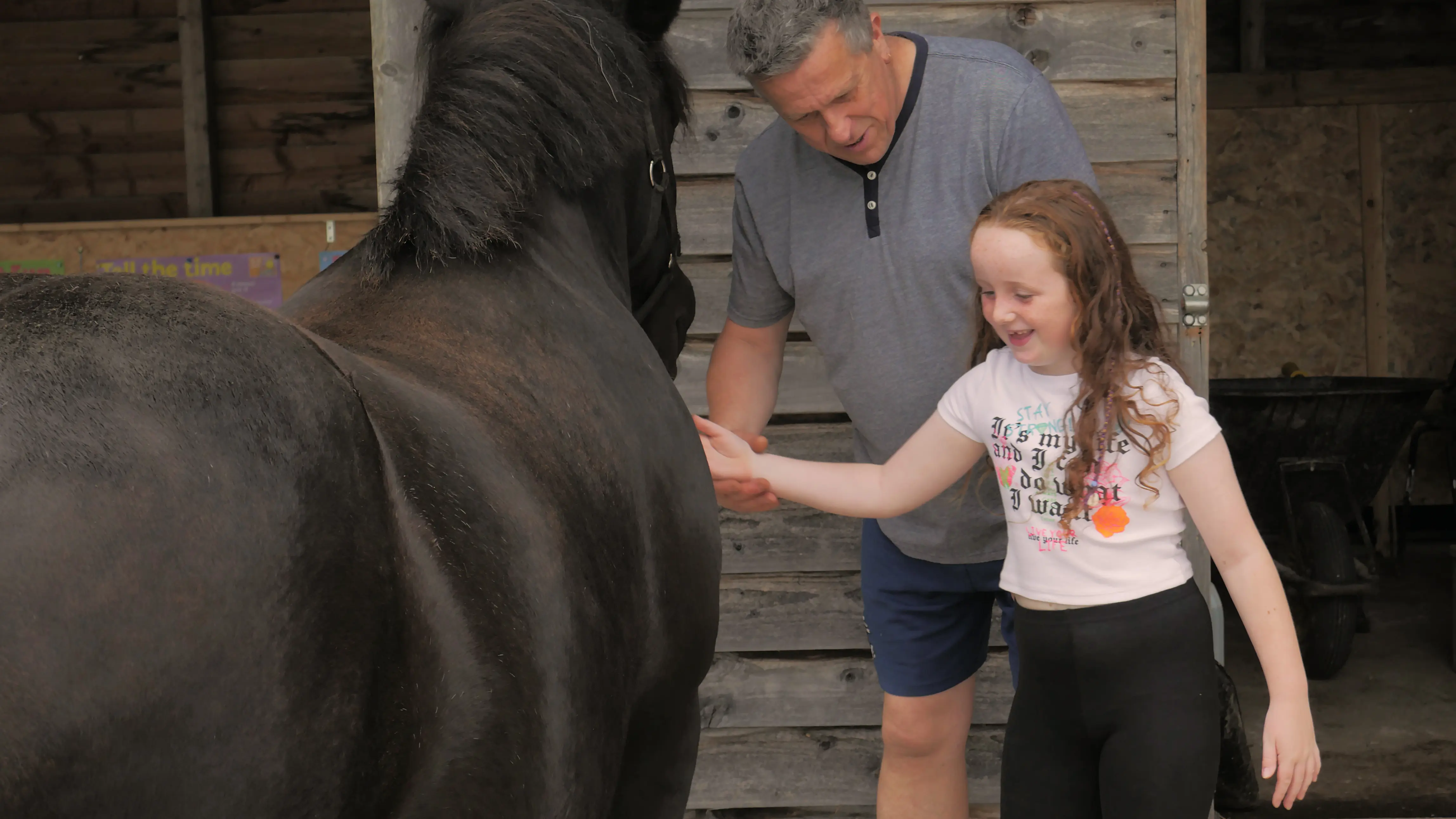
Many of the families who come to SJ Equine Coaching have already tried other supports for their child. Some have been through occupational therapy, speech and language therapy, psychology, and various school-based interventions. Some of those helped; some didn't. What parents consistently tell us is that EAL reaches their child in a way that other approaches haven't managed to.
Part of this is the setting. Being outdoors in Cloonlara, surrounded by horses and open space, is a world away from a waiting room or a therapy office. Part of it is Majella's approach — her background as a special needs assistant means she understands how children with additional needs communicate and process the world, and she adapts every session to meet the child where they are, not where a programme says they should be.
And part of it is the horses themselves. Socks, Wally, and Wilma each have their own temperament and energy. Majella matches children with the horse that suits them best, and sometimes that match is the thing that makes everything click.
Is EAL Right for Your Child?
If your child has ASD, ADHD, sensory processing difficulties, anxiety, or any additional need that makes traditional settings a challenge, Equine Assisted Learning is worth exploring. It's not a replacement for clinical therapies it works beautifully alongside them — but it offers something those settings often can't: a space where your child can be themselves, connect with another living being, and build skills through experience rather than instruction.
Sessions at SJ Equine Coaching take place in Kilmore, Co. Clare, and we work with families from across Clare, Limerick, and surrounding areas. There's no referral needed, no waiting list bureaucracy. Just get in touch with Majella for a chat about your child, and we'll take it from there.
Whether your child takes to it straight away or needs weeks to warm up, both are completely fine. We follow their lead, always.
Frequently Asked Question
