Understanding sensory sensitivity and engagement in autistic children
A lot of parents of autistic children will recognise this pattern. Your child has good days and difficult days, and there's no reliable way to predict which one you're going to get. Some days they'll engage with an activity, a person, or an environment. Other days they won't, and no amount of encouragement, redirection, or patience will change that.
This isn't defiance. It's not a bad mood. For many autistic children, the willingness to engage depends on how their sensory system is coping in that moment. If the world feels too loud, too bright, too unpredictable, or too overwhelming, the shutters come down. The child retreats inward because that's the safest place to be.
For parents and support workers, it can feel like two steps forward, three steps back. You see glimpses of progress, then a session where nothing lands. You start to wonder whether the activity is actually helping at all.
That's exactly where things were with Cian when this particular session happened.
Cian's background
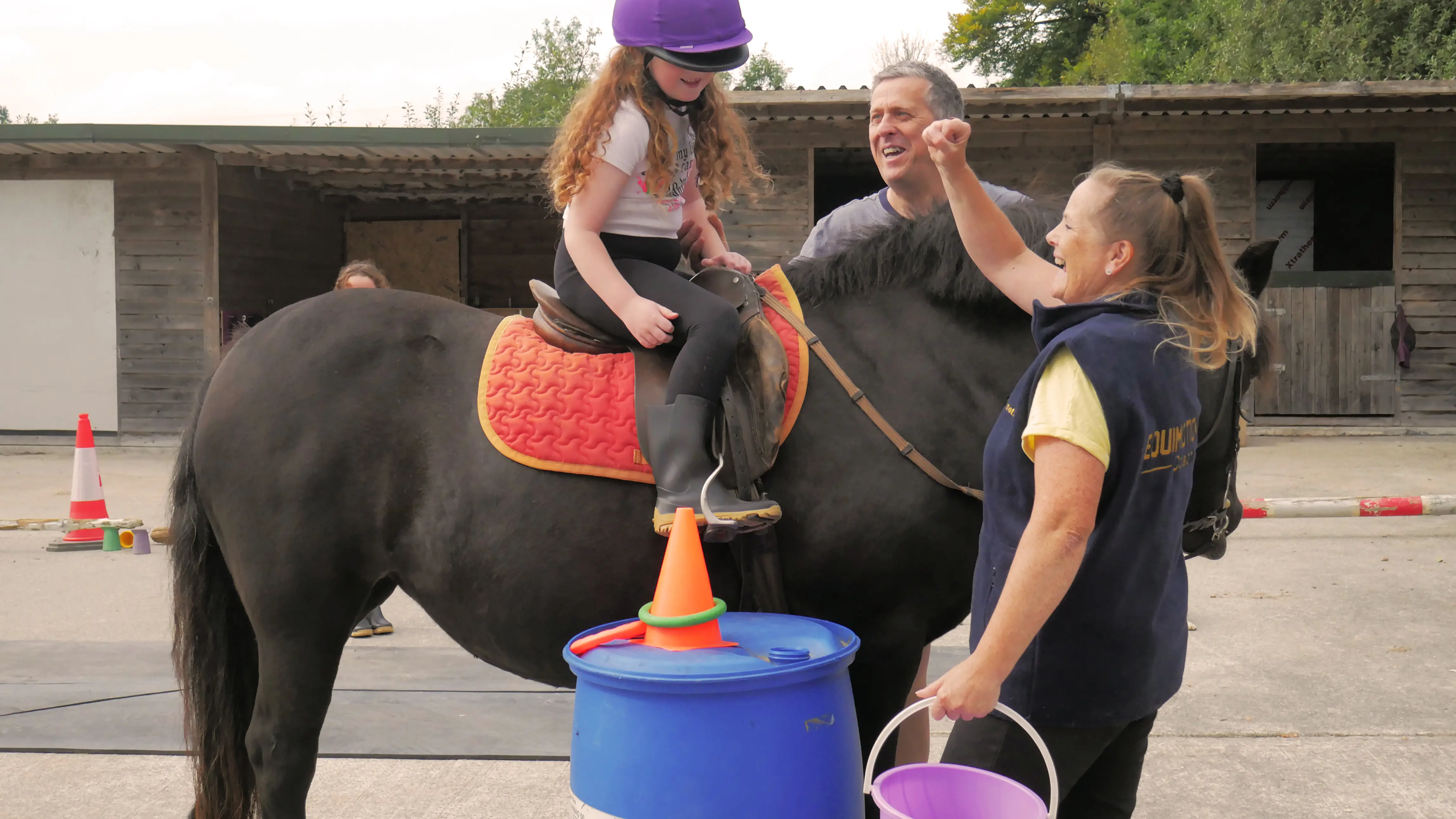
Cian had been coming to us for close to a year. He's autistic, has sensory sensitivities, and his engagement in sessions varied hugely depending on the day. He came with support workers, and together with Majella they'd built a familiar routine around the yard and around Socks.
Some sessions were brilliant. Cian would interact with Socks, allow physical proximity, and show signs of enjoyment and connection. Other sessions he simply wouldn't engage. He'd be present in the yard but unreachable. Not distressed, not upset, just somewhere else. Socks would be right there, calm and patient as always, and Cian would have no interest.
This is common with autistic children in any therapeutic setting. Progress isn't linear. It doesn't follow a neat upward curve. It jumps and stalls and sometimes seems to disappear entirely before showing up again in unexpected ways.
Majella understood this. She never treated the "off" days as failures. She adjusted, she waited, and she kept showing up with the same patience every single time. But after months of inconsistent engagement with Socks, she started thinking about whether a different horse might create a different response.
Why the match between child and horse matters
This is something that doesn't get talked about enough in equine-assisted work. Not every horse suits every child. Horses have their own personalities, their own energy, their own way of being in the world. Socks is calm, gentle, and non-reactive. For a lot of children, that's exactly what they need. A steady, predictable presence that doesn't demand anything.
But for some children, that steadiness doesn't create a spark. The horse is too still, too passive, too much like background noise. The child needs something different to break through. Maybe a horse with more curiosity, more movement, more personality. Something that catches their attention in a way that calmness alone can't.
Majella had been watching Wilma over the preceding months. Wilma is our rescue miniature horse. She's smaller, closer to a child's eye level, and she has a different energy to Socks. She's shy and a bit nervous herself, which makes her tentative and curious rather than bold. She approaches slowly, she sniffs, she investigates. There's a quality to her that Majella thought might connect with Cian in a way Socks hadn't been able to.
It was a professional instinct. After nearly a year of working with Cian, Majella knew him well enough to read what he responded to and what he didn't. She decided to introduce Wilma.
What happened in the session
On this particular day, Cian arrived and the session started as usual. But instead of going to Socks, Majella brought Wilma into the space.
The change was almost immediate.
Cian noticed Wilma. Not in the passive way he sometimes noticed Socks, but with genuine, visible attention. His eyes tracked her. His body shifted towards her. Something about Wilma's size, her movement, her energy, caught him in a way that nearly a year of sessions with Socks hadn't managed.
Majella asked Cian to touch Wilma. He wouldn't. This wasn't unusual. Autistic children with sensory sensitivities often resist touch, especially with something new. The texture of a horse's coat, the warmth of the body, the unpredictability of an animal that might move, all of that can be too much sensory information at once.
So Majella did something simple. She gently took Cian's hand and placed it on Wilma's back.
His entire face changed.
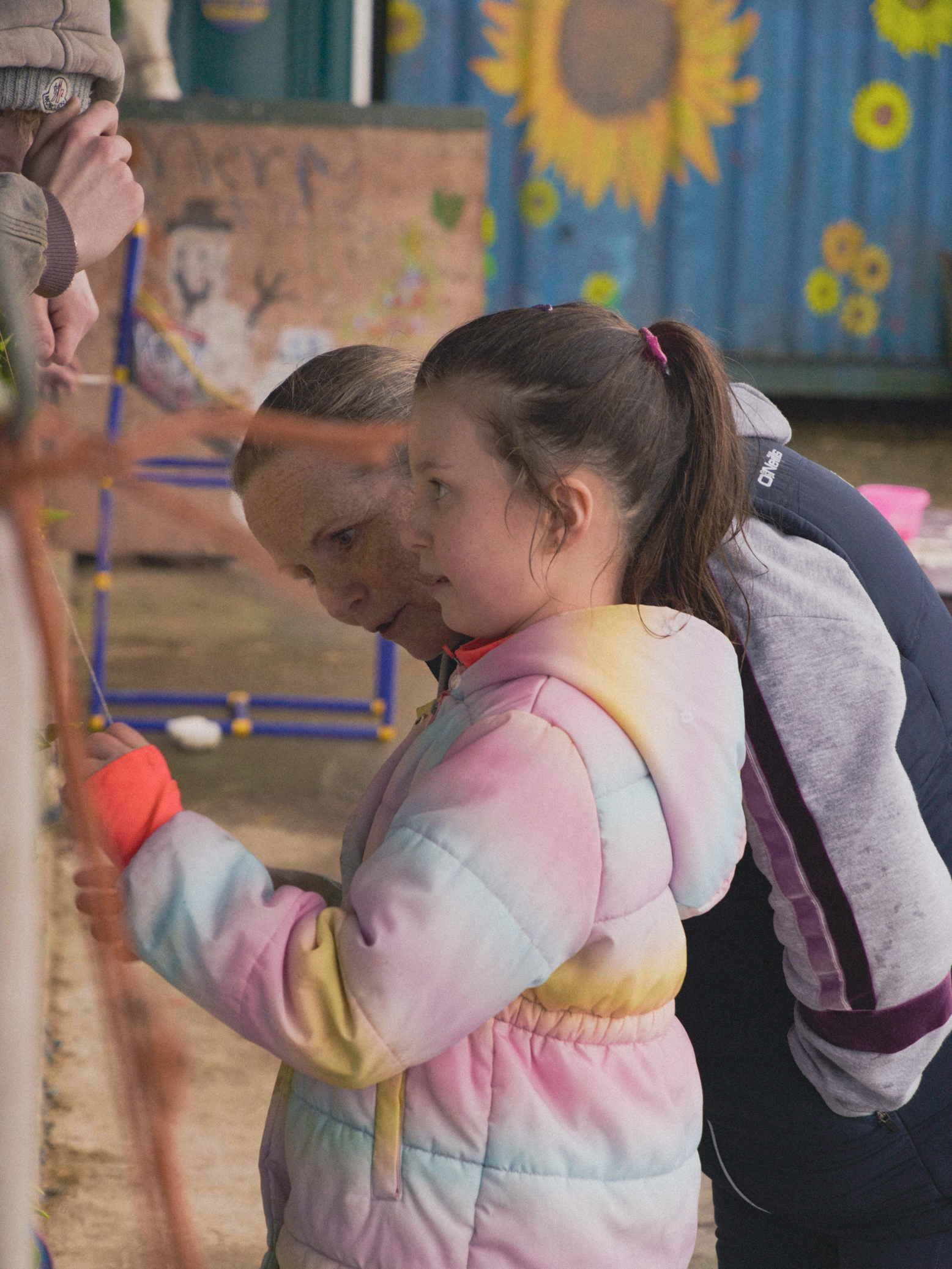
His eyes went wide, a smile broke across his face, and he jumped up and down laughing. Not a polite smile or a quiet reaction. Pure, unfiltered joy. The kind of response that catches you off guard because you've been waiting months to see anything close to it.
Majella asked him to touch Wilma again. He did. On his own this time.
Then he kept going. He touched her again and again, his hand on her back, her neck, exploring the feel of her coat. He was choosing to engage, choosing to reach out, choosing physical contact with another living being. For a child with sensory sensitivities who had spent nearly a year being inconsistently willing to touch Socks, this was enormous.
Majella and his support workers stood watching, trying to hold it together. It was one of those moments where everyone in the yard knew they were seeing something significant.
Why this matters: the science behind the match
What happened with Cian and Wilma isn't random, and it isn't a miracle. It's rooted in how autistic children process sensory information and how they form connections.
Size and proximity. Wilma is a miniature horse. Her back is roughly at chest height for a primary school child. This changes the sensory dynamic completely compared to a full-sized horse like Socks. A large horse can be overwhelming for a child with sensory processing differences. The sheer physical presence, the height, the broad body, can feel like too much. A miniature horse is physically accessible. The child can see over her, reach her easily, and doesn't have to look up or stretch. That reduction in physical scale can be the difference between a child shutting down and a child reaching out.
Matching energy. Wilma is herself a nervous, cautious animal. She was rescued from a neglectful situation and spent her first weeks with us too frightened to come near anyone. She approaches the world slowly, tentatively, and on her own terms. For an autistic child who experiences the world in a similar way, that shared quality can create recognition. Not in a conscious, intellectual way, but in a felt, sensory way. Wilma doesn't rush. She doesn't crowd. She investigates at her own pace. For Cian, that pace may have matched his own internal rhythm in a way that Socks' still, grounded energy didn't.
Novelty and attention. Autistic children can sometimes habituate to familiar stimuli. After months with Socks, the sensory experience of being near her had become predictable and perhaps no longer registered as interesting. Wilma was new. New smell, new size, new coat texture, new energy. That novelty captured Cian's attention in a way that familiarity couldn't. This is well documented in autism research: engagement often spikes with novel stimuli before habituating, which is why varying the environment and the activities matters.
Tactile experience. Different horses have different coat textures, body temperatures, and muscle tone. Wilma's coat, her size, and the feel of her body under Cian's hand provided a different sensory input than Socks. For a child whose willingness to engage is heavily mediated by sensory processing, that difference in tactile feedback may have been the critical variable. What felt "too much" or "not enough" with Socks felt right with Wilma.
Voluntary touch as a breakthrough. The progression in this single session tells the full story. First, Cian wouldn't touch Wilma. Then Majella guided his hand. Then he chose to touch on his own. Then he repeated it voluntarily, multiple times. That sequence, from refusal to guided contact to independent, repeated, chosen engagement, is exactly the kind of progression that can take weeks or months in a structured clinical setting. The right match between child and animal compressed it into minutes.
What this tells us about how we work
This session with Cian changed how Majella approaches matching children with horses across all our work. Every child who comes to the yard now gets time around multiple horses, not just one. Majella watches closely, reads the child's body language and energy, and looks for the match that creates connection rather than assuming one horse fits all.
It also reinforced something Majella has always believed: the "off" days aren't wasted days. Every session Cian spent in the yard, even the ones where he barely engaged, was building familiarity with the environment, trust with Majella, and a baseline of safety that made the breakthrough with Wilma possible. If he'd met Wilma on day one, without that foundation, the response might have been completely different.
Progress with autistic children doesn't always look like progress while it's happening. Sometimes it looks like nothing at all until one day, in one moment, everything comes together.
What Cian's support workers said
His support workers described the session as one of the most significant moments they'd witnessed in their time working with Cian. They'd seen the months of mixed engagement and had questioned, as anyone would, whether the sessions were having enough impact. Watching Cian's reaction to Wilma answered that question definitively.
They reported that in the weeks following, Cian's willingness to engage with animals and with physical touch in other settings improved noticeably. The session with Wilma hadn't just been a one-off moment of joy. It had shifted something in him that carried beyond the yard.
If your child is autistic and you're wondering whether this could help
We work with autistic children across the spectrum, including those with sensory processing differences, limited verbal communication, and children who have found other therapeutic approaches difficult to engage with. Many families come to us after trying multiple interventions and feeling like nothing has quite clicked.
What we do differently is simple: we don't have a programme your child has to fit into. We fit around them. Sessions are always 1-on-1 with Majella, we have multiple horses with different temperaments and energy levels, and we let your child lead. Some children take to the horses straight away. Others take weeks or months to warm up. Both of those are completely fine.
We're based in Cloonlara, Co. Clare, and work with families from across Limerick, Clare, and surrounding areas. If you'd like to talk about your child, ask questions, or just hear more about what a session looks like, get in touch.