

- Editor

- CategoryEquine Assisted Learning (EAL)
- DateMarch 7, 2026
- Share
Wondering if equine assisted learning could help your child? This guide explains what EAL involves, what a session looks like, and why horses can reach children when other approaches haven't. Find out if working alongside our horses could be the different path forward you've been looking for.
You’re probably reading here because something isn’t quite right for your child. Maybe school is a daily battle. Maybe the meltdowns after pick-up leave you both exhausted. Maybe you’ve tried talk therapy, and your child sat there in silence, arms folded, refusing to engage. You’re not alone in that experience, and you’re not alone in wondering if there’s something different out there.
That’s exactly how most families find their way to me. My name is Majella Moloney, and I run SJ Equine Coaching from our small farm in Broadford, Co. Clare. I’m a certified Equimotional Wellbeing Coach, a BHS-qualified equine coach, and I spent many years working as a Special Needs Assistant in schools before making this my full-time work. I’ve seen first-hand what happens when a child who won’t talk to an adult will walk up to a horse and start whispering.
This post is for parents who are curious about equine assisted learning but aren’t sure what it actually involves. I’ll walk you through what EAL is, what it isn’t, what a session looks like, and why horses have this remarkable ability to reach children when other approaches haven’t.
So What Exactly Is Equine Assisted Learning?
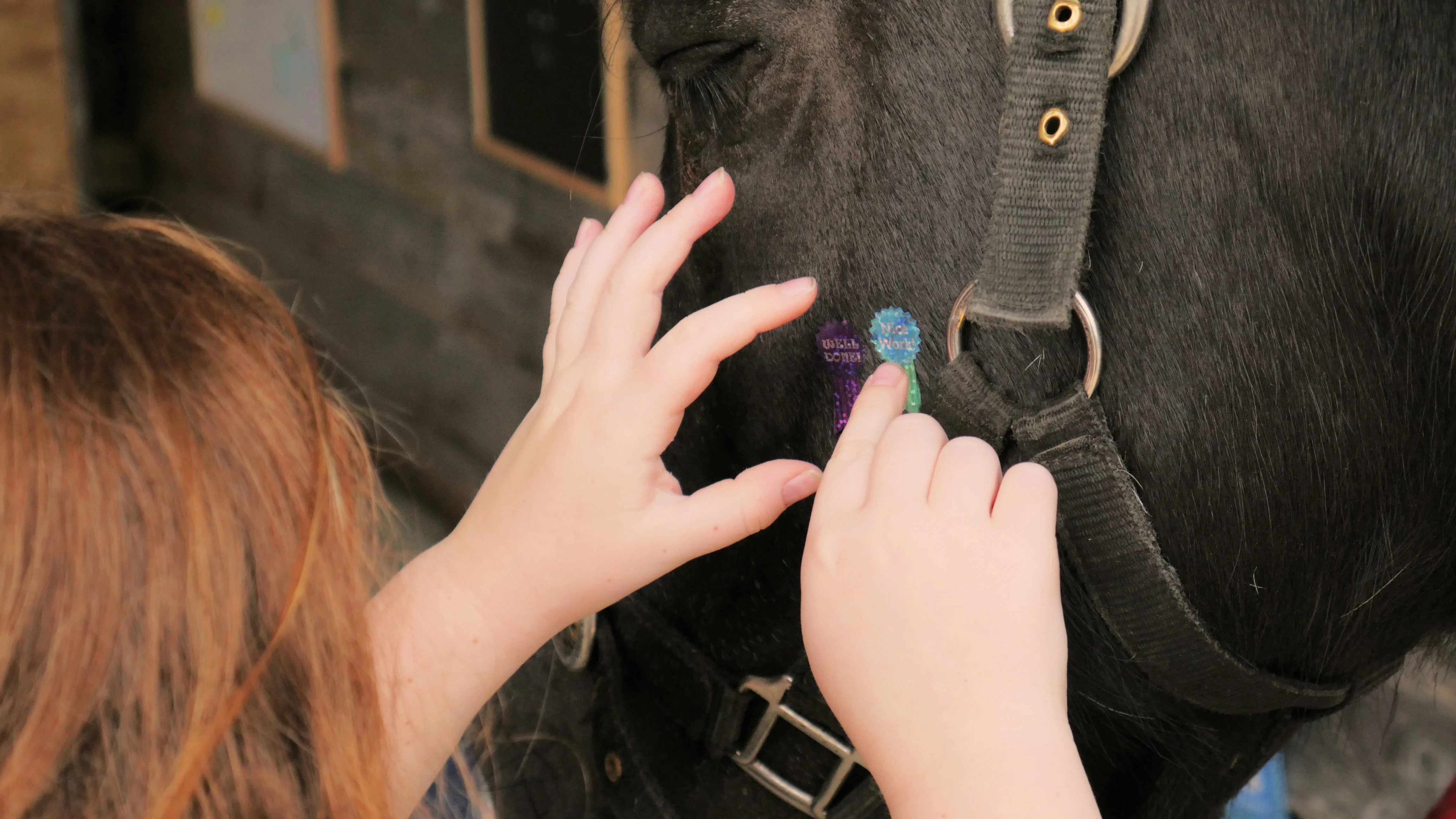
Equine assisted learning is an experiential approach where children work alongside horses on the ground. There’s no riding. Instead, children engage in activities like grooming, leading, observing, and caring for the horse. Each activity is designed with a purpose, whether that’s building communication, practising patience, developing confidence, or learning to regulate big emotions. For a more detailed look at how EAL supports children with additional needs like autism, ADHD, and sensory processing differences, read our full guide here.
Think of it like this: a horse is a 500kg mirror. Horses are prey animals, which means they’re constantly reading the energy and body language of everything around them. If a child approaches feeling anxious and rushed, the horse will step back or turn away. If the child slows down, breathes, and softens their approach, the horse responds in kind. That feedback is immediate, honest, and completely non-judgemental. No horse has ever said “you’re doing it wrong.” They simply reflect what’s happening.
For children who struggle with emotional regulation, that feedback loop is incredibly powerful. It’s not me telling them to calm down. It’s the horse showing them what calm looks and feels like. See more information here.
What EAL Is Not
I want to be upfront about this because there’s a lot of confusion in the space. EAL is not psychotherapy. I’m not a psychologist or a therapist, and I don’t make clinical claims. What I am is a qualified coach with nearly two decades of experience working with children with additional needs, and I use horses as my co-facilitators.
EAL is also not pony rides or a recreational activity. Every session has learning objectives. Every interaction with the horse is purposeful. The activities might look simple from the outside, but there’s a lot happening beneath the surface.
It’s also different from equine assisted activities (EAA) and Equimotional Wellbeing Coaching, which I also offer. EAA can include therapeutic riding elements and is specifically tailored for children with additional needs like autism, ADHD, or sensory processing challenges. Equimotional Wellbeing Coaching goes deeper into emotional wellbeing for those dealing with stress, anxiety, or trauma. I’ll explain the differences in more detail in a separate post (see: EAA vs EAL: What’s the Difference?).
What Does a Session Actually Look Like?
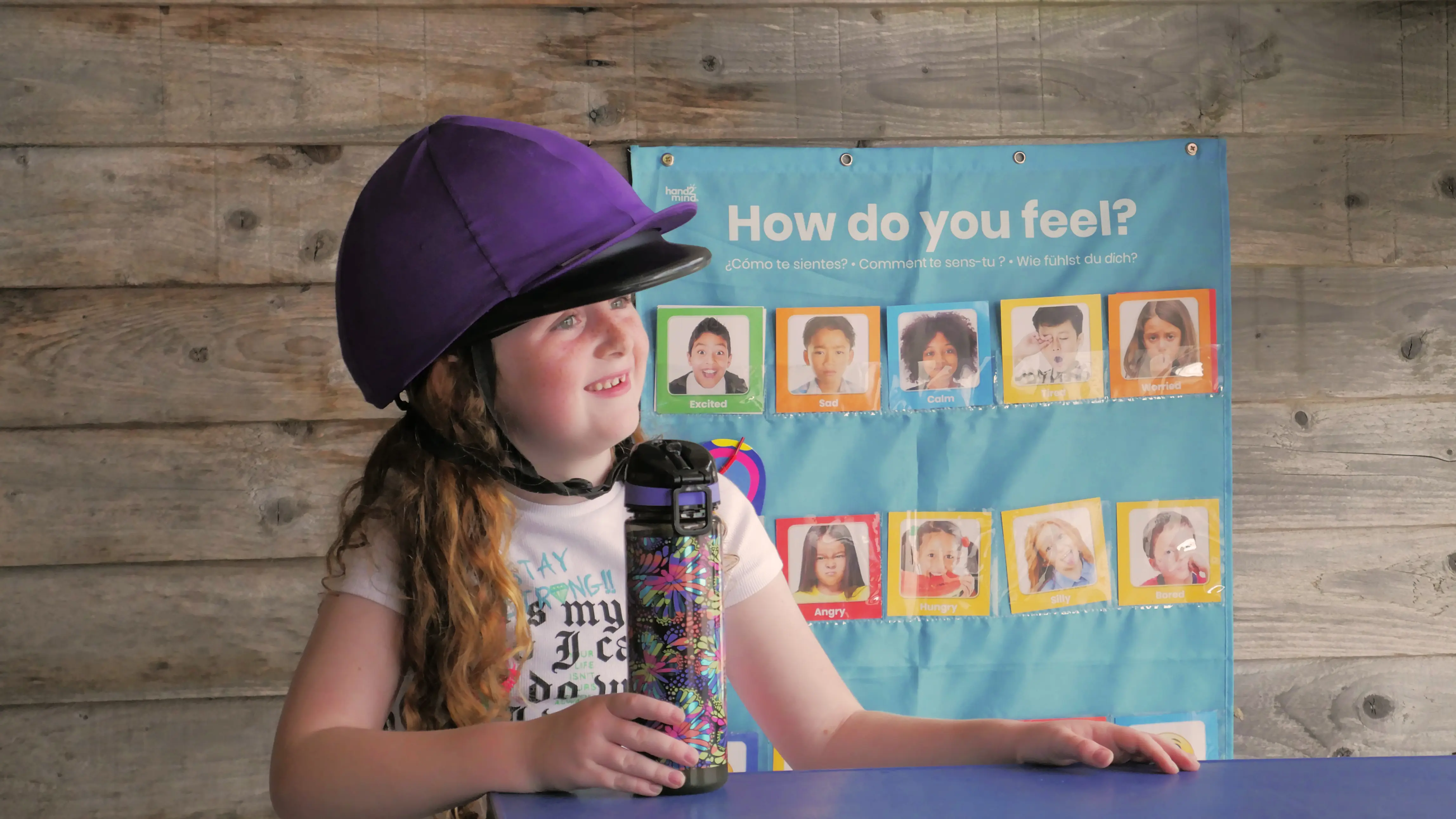
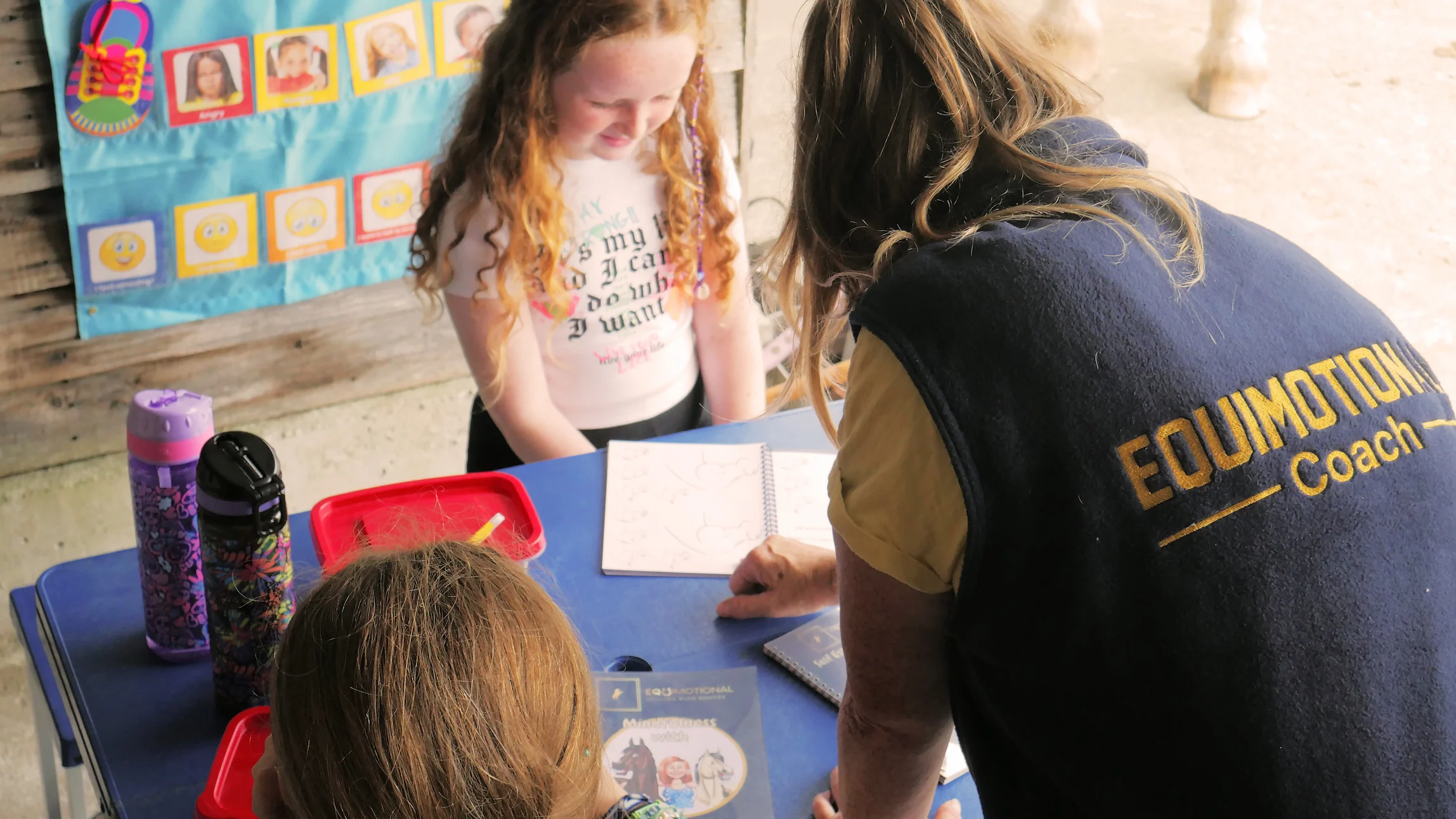
A typical one-to-one session runs for about 30 minutes. We start by checking in. I ask your child how they’re feeling, what kind of day they’ve had. Sometimes they tell me. Sometimes they don’t. Either way, I’m already observing. Then we head out to the horses. Depending on your child’s mood and needs that day, I might ask them to choose which horse they want to work with. That choice itself tells me a lot.
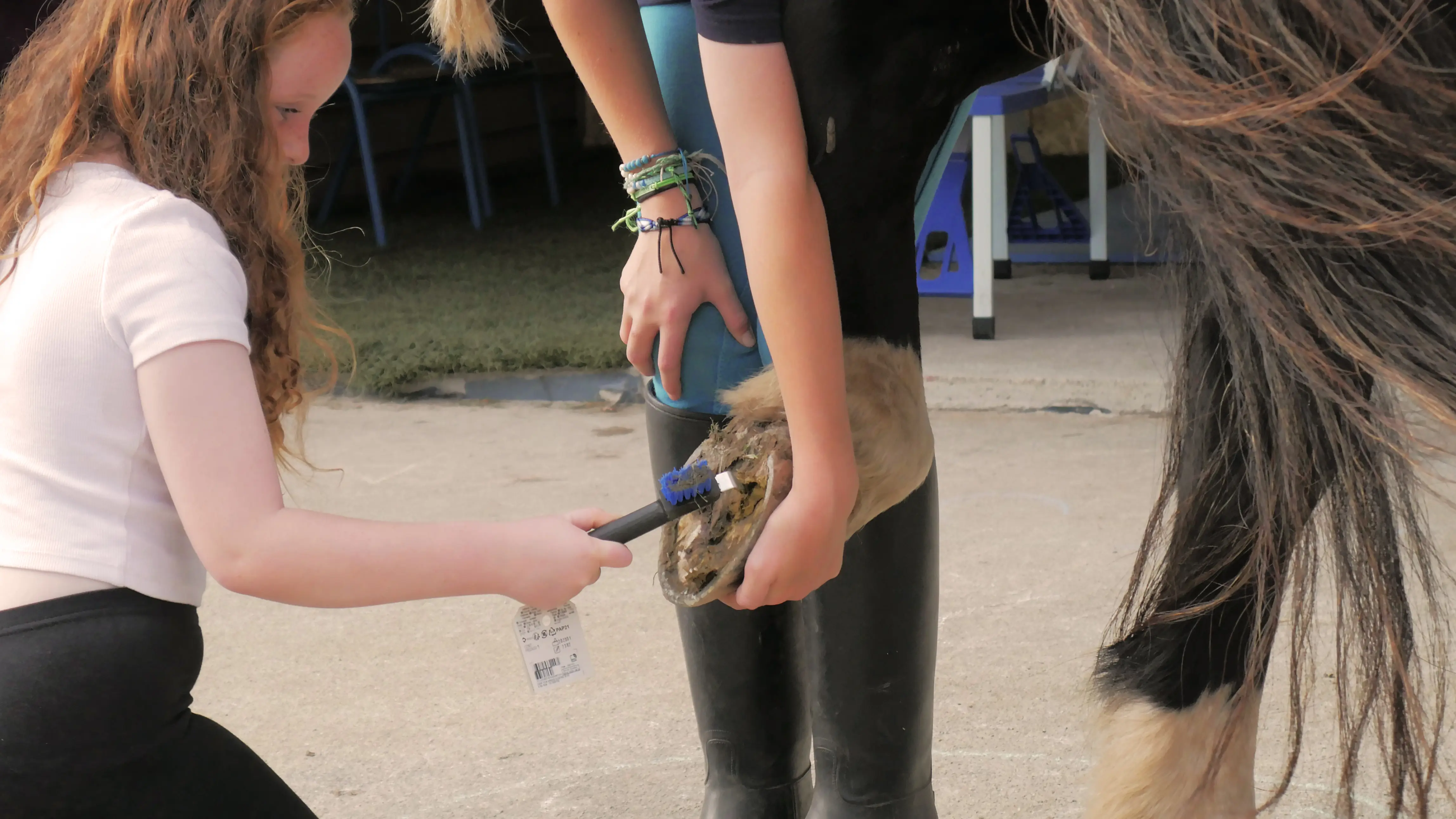
From there, we move into groundwork activities. It could be grooming, which requires patience and a gentle touch. It could be leading the horse through an obstacle course, which demands clear communication and confidence. Or it could be something as simple as standing quietly beside the horse and noticing how they breathe.
I don’t follow a rigid script. The session is led by your child. If they arrive wound up and buzzing, we might spend the first twenty minutes just walking and breathing with the horse until they settle. If they arrive quiet and withdrawn, we might work on an activity that builds a small success early on. The horses guide me as much as I guide your child. We do have a Discovery Session to see if your child likes it, 60-minutes full session.
PRO TIP: Let your child lead the conversation after sessions. Parents often ask “what did you do today?” on the drive home. Try not to. Let your child share in their own time. Some children process slowly and will mention something three days later at dinner. If you push, you risk turning the session into another thing they have to perform at.
Why Horses? Why Not Dogs or Other Animals?
I get this question a lot. Dogs are wonderful, but they’re wired to please. A dog will wag its tail even when you’re stressed. A horse won’t. Horses respond to how you show up, not to whether you’ve brought treats.
There’s also the size factor. Standing beside an animal that weighs half a tonne requires a child to step into a space they’d normally avoid. It takes courage. And when they manage to lead that animal across a yard through calm body language alone, the sense of achievement is real and earned. You can’t fake it with a horse.
Research from organisations like PATH International and studies published in journals such as Frontiers in Veterinary Science have shown that equine-assisted interventions can positively impact children’s social competence, emotional regulation, and stress response. The evidence base is growing, and what the research describes is exactly what I see in my sessions every week.
PRO TIP: Visit the stable before booking if your child is anxious, If your child is nervous about the idea of being around horses, ask me about a casual visit first. Sometimes just walking around the stable, seeing the horses from a distance, and getting familiar with the space is enough to take the edge off before a proper session.
Who Is EAL For?
Honestly? Almost any child can benefit from time with horses. But the families who tend to find me are those whose children experience one or more of the following:
- Difficulty managing emotions, including meltdowns, outbursts, or shutdowns
- Anxiety, low confidence, or social withdrawal
- ADHD, autism, or sensory processing differences
- Difficulty with transitions, change, or new environments
- Low self-esteem or reluctance to try new things
I’ve worked with children as young as four and adults in their seventies. The common thread isn’t a diagnosis. It’s a feeling of being stuck and needing a different way forward.
PRO TIP: Don’t wait for a diagnosis, many parents feel they need a formal diagnosis before seeking support. You don’t. If your child is struggling, that’s enough. EAL doesn’t require a referral, a diagnosis, or a letter from anyone. You know your child better than any assessment.
Common Myths About Equine Assisted Learning
Q: My child is afraid of horses. Can they still do EAL?
A: Absolutely. Many children who come to me are nervous at first. We never rush. Some children spend their entire first session just watching from a distance. The horses are gentle, patient, and specifically chosen for this work. Fear often turns to curiosity very quickly.
Q: Is it just for children with special needs?
A: No. While many of my clients have additional needs, EAL benefits any child who could use a confidence boost, better emotional regulation, or improved communication skills. It’s not clinical. It’s developmental.
Q: Do they need to know how to ride?
A: Not at all. EAL is entirely ground-based. No riding, no helmets, no saddles. Your child works alongside the horse, not on top of it.
Q: Is it safe?
A: Yes. I’m BHS qualified, fully Garda vetted, and insured. I’ve spent many years as an SNA working with children with complex needs. Safety is my first consideration in every session.
Q: How many sessions will my child need?
A: It varies. Some children come for a six-week Foundation Programme and that’s enough. Others become regulars. I’d recommend starting with a Discovery Session so we can chat about what your child needs and go from there.
If you have more questions, you can see our FAQ page, or call me if you have more questions. I am here to help you and your child.
What Parents Tell Me
I hear the same thing from parents again and again: “We tried everything else, and this is the first thing that actually worked.” One mother told me her son, who had selective mutism, was speaking within weeks of starting sessions. Another said her daughter, who melted down after every school day, would leave my farm calm and smiling.
I don’t share these stories to make promises. Every child is different. But the pattern I see is consistent: when a child finds a space where they feel safe, unjudged, and genuinely seen, they begin to open up. The horses create that space. I just hold it. You can see our Success Stories here.
Ready to Take the First Step?
If anything in this post resonated with you, I’d love to chat. A Discovery Session is a relaxed, no-pressure visit where you and your child can meet the horses, ask questions, and see whether this feels right. There’s no commitment to continue.
Book a Discovery Session or call me on 087 266 80 80.
I look forward to hearing from you.
Majella Moloney
SJ Equine Coaching | Broadford, Co. Clare
Frequently Asked Question
