

- Editor

- CategoryParent Guides
- DateMarch 7, 2026
- Share
Is your child melting down after school, avoiding new situations, struggling to focus, or saying things like "I'm stupid"? This guide breaks down five signs that your child might benefit from equine assisted learning and explains why horses can reach children when traditional approaches haven't. If any of these sound familiar, a Discovery Session is a relaxed first step to see if EAL is right for your family.
You collect your child from school and the car door slams. Before you’ve pulled out of the car park, they’re crying, shouting, or completely shutting down. The school says they were “fine all day.” But you know this version of fine has a price, and your child pays it the moment they feel safe enough to fall apart.
If this sounds familiar, you’re not imagining things. What you’re likely witnessing is something called after-school restraint collapse. Your child has spent the entire day holding it together, masking, conforming, and suppressing every impulse. By the time they reach you, there’s nothing left in the tank.
1. The After-School Meltdown Is a Daily Event
A meltdown isn’t a tantrum. Tantrums have an audience and a goal. Meltdowns happen because the nervous system is overwhelmed. If your child is consistently falling apart after school, at bedtime, or during transitions, their emotional regulation system is under strain.
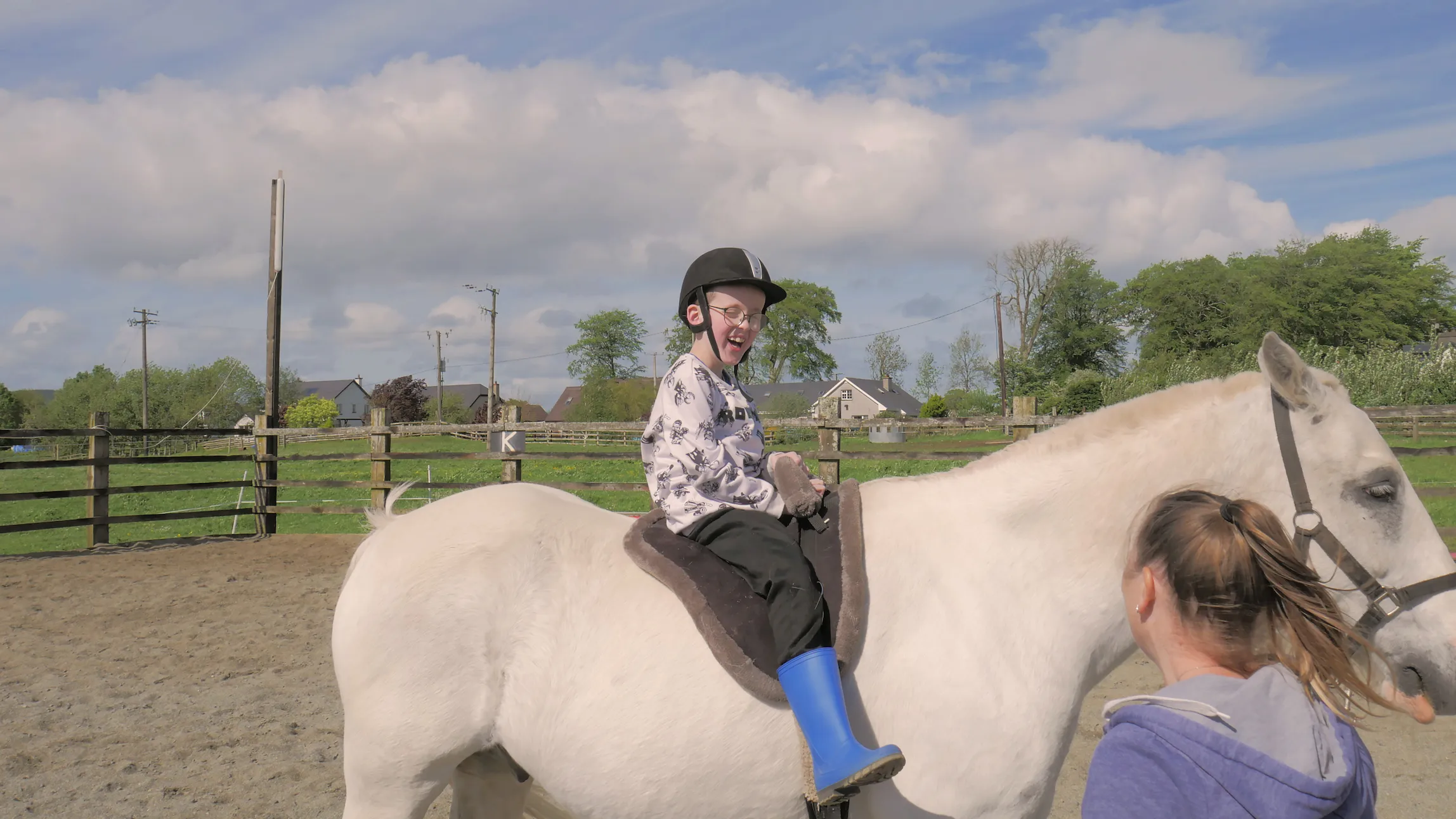
What I see when these children come to the farm is striking. Within fifteen minutes of being near the horses, many of them start to decompress. The farm is quiet. There’s no fluorescent lighting, no bell ringing, no thirty other children competing for attention. The horses don’t ask questions. They just stand there, breathing slowly, and the child’s body starts to match that rhythm without anyone telling them to.
It’s not magic. It’s co-regulation. And horses are remarkably good at it.
2. Your Child Avoids New Situations or People
Some children express overwhelm outwardly. Others turn inward. They refuse birthday parties. They won’t try new activities. They cling to routines and become distressed when things change. The outside world feels unpredictable and unsafe.
Horses offer something these children desperately need: predictability without monotony. A horse’s behaviour is honest and consistent. If the child approaches calmly, the horse responds calmly. That reliability builds trust. And trust, for an anxious child, is the foundation everything else sits on.
I’ve watched children who wouldn’t enter a room full of people walk confidently across a yard to greet a horse three times their size. The horse doesn’t judge. It doesn’t have expectations. It simply responds to who you are in that moment.
PRO TIP: Start small and say less, If your child is avoidant, don’t oversell the experience. Saying “You’re going to love this!” creates pressure. Instead, try “We’re going to visit a farm. You don’t have to do anything you don’t want to.” Removing the expectation removes the threat.
3. Focus Is a Constant Battle
Teachers say your child can’t concentrate. Homework takes three hours. Instructions go in one ear and out the other. Before jumping to conclusions about attention difficulties, consider this: focus isn’t always a deficit. Sometimes it’s a sign that the environment isn’t right.
Classrooms are busy, noisy, and full of competing stimuli. Horses require a different kind of attention. When a child is leading a horse, they have to be present. If their mind wanders, the horse stops. If they pull too hard, the horse resists. The feedback is immediate and physical, not verbal. For children who have tuned out adult instructions, this kind of feedback cuts through in a way words can’t.
I’ve worked with children diagnosed with ADHD who can focus intently for an entire 30-minute session with a horse. It’s not that they can’t focus. It’s that they need the right conditions to do so. (For more on this, read: How Equine Coaching Helps Children with ADHD Build Focus and Calm.)
4. Self-Esteem Is Low and Shrinking
Your child says things like “I’m stupid,” “I can’t do anything,” or “nobody likes me.” They compare themselves unfavourably to siblings and peers. They’ve stopped trying because they’ve decided they’ll fail.
This is the sign that hits me hardest because by the time a child speaks like this, the pattern has been reinforced for months or years. They’ve internalised failure as identity.
Horses break that cycle. When a child successfully grooms a horse, leads it through an obstacle, or earns its trust, that’s not a participation trophy. That’s a genuine achievement. The horse didn’t cooperate because it was being nice. It cooperated because the child earned its respect. That distinction matters enormously.
PRO TIP: Celebrate the process, not the result, When your child tells you about their session, focus on what they did rather than how it went. “You brushed the horse yourself? That’s brilliant” is more powerful than “Did you do well?” Children who struggle with confidence need to see that effort has value, regardless of outcome.
5. Traditional Approaches Haven’t Worked
This is the one I hear most often. Parents arrive at my gate having already tried speech therapy, play therapy, occupational therapy, counselling, and various other interventions. Some of those approaches helped. Others didn't quite land, often not because the therapy itself was wrong, but because the setting or format didn't suit the child.
A room, a desk, and direct questions about feelings can be the very things that cause some children to shut down.
If your child has resisted other forms of support, it doesn’t mean they don’t need help. It means the format wasn’t right. Horses offer a completely different doorway into the same outcomes. You can read our What Is Equine Assisted Learning? A Parent Guide
PRO TIP: Keep expectations low for the first few sessions. Don’t expect transformation after session one. Some children take three or four visits before they start to relax. That’s normal. The relationship with the horse needs time to develop, just like any relationship. Patience here pays off enormously.
You Know Your Child Best
If you recognised your child in any of the five signs above, trust that instinct. You don’t need to have all the answers, and you don’t need to wait for things to get worse before seeking support. Sometimes the best thing you can do is try something different.
Ready to Take the First Step?
If anything in this post resonated with you, I’d love to chat. A Discovery Session is a relaxed, no-pressure visit where you and your child can meet the horses, ask questions, and see whether this feels right. There’s no commitment to continue.
Book a Discovery Session or call me on 087 266 80 80.
I look forward to hearing from you.
Majella Moloney
SJ Equine Coaching | Broadford, Co. Clare
Frequently Asked Question
